
Thermoplastic Solutions for Food Processing & Conveyance
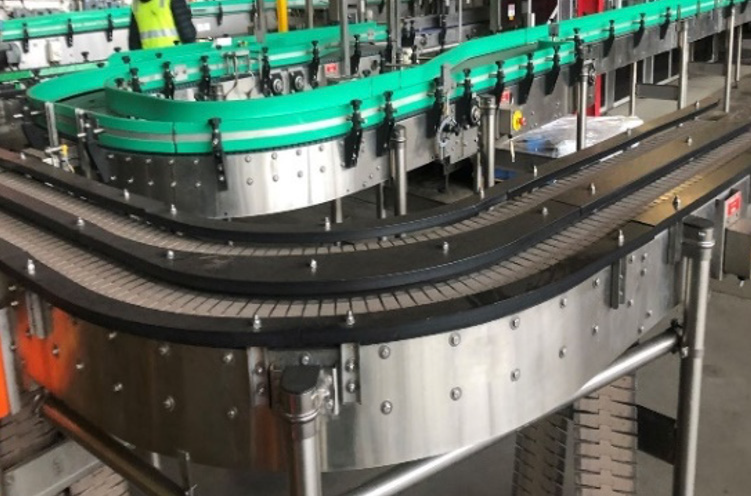
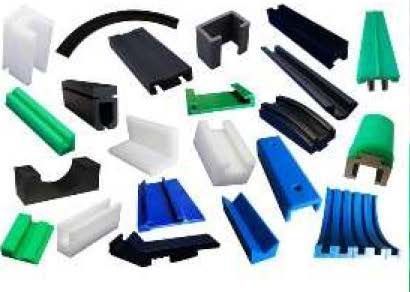
Cut wear, drag, and downtime in food processing with engineered thermoplastic conveyor and automation components. From wear strips, chain guides, and sprockets to plastic gears, these materials deliver low friction, corrosion resistance, washdown durability, and reliable performance in demanding conveyance environments.
Contact Us today to learn more about how our thermoplastics for food processing & conveyance can help optimize your operation.
Thermoplastics for Conveyor Systems
Is Your Conveyor System Dragging Down Profits?
Nothing is more disruptive to production than a conveyor system constantly needing maintenance. Chain guides, drive sprockets and wear strips can create unwanted friction leading to excessive drag. Excessive drag requires increased power to keep things moving. Swapping out worn components can be difficult, expensive, and especially untimely. Let’s look at a few performance benefits plastics provide for conveyor systems.
Plastics Reduce Wear
Selecting the optimal material inevitably improves the life of wear components. Moving parts or segments eventually require replacing. Plastics outperform metals by as much as 20x; less wear means a longer life span.
Plastics Reduce Friction
The more friction a conveyor has to overcome, the less efficient that conveyor will be. In other words, higher levels of drag in your conveyor result in increased electricity required to power it. With the costs of energy skyrocketing, this becomes increasingly critical to solving.
Plastics Are Corrosion-Resistant
Plastics do not break down, they do not rust, and they do not decay. On the other hand, metals can become rusted or pitted from chemicals found in greases and cleaning solvents, leading to numerous issues.
Plastics Are Lightweight
Plastics are typically lighter than metal. Lowering component weight helps to decrease the overall conveyor drag force. It also means you can increase the number of wear strips while maintaining the same weight!
Plastics Are Naturally Lubricated
Many plastics used to produce wear components have self-lubricating qualities and thus do not require the same level of maintenance. Plastics are ideal for complex conveyors or closed-looped systems. Simply put, they will not require the same level of lubrication.
What To Consider When Selecting Plastics For Conveyance
Today's conveyor systems consist of extremely complex designs with many moving parts, requiring highly engineered plastic wear components.
Demanding conveyor environments rely on robust plastic solutions that can consistently and reliably support the transportation of high volumes of material. Engineers are challenged with finding the proper materials to minimize line stoppage while increasing the efficiency of transporting goods from one place to another.
Coefficient Of Friction (COF)
By decreasing the coefficient of friction, drive chains move more easily rendering the system more efficient with the added benefit of reducing the amount of power that is needed to drive the conveyor.
Abrasion Resistance
Abrasion resistance is a property that allows a material to resist wear. Excellent abrasion resistance of a material helps to withstand mechanical action and tends to protect the removal of materials from its surface. This allows the material to retain its integrity, not to mention last longer. Many materials are specifically formulated for high abrasion resistance.
Thermal
Often conveyor materials need to withstand elevated heat environments. In this case one needs to understand the operating temperature of the plastic and match it to the application needs. COF and Thermal are co-dependent in the conveyor environment.
Coefficient Of Thermal Linear Expansion (CLTE)
CLTE is the rate at which the size of a material changes with respect to temperature change. It is critical to consider and properly match CLTE of the material to the requirements of the system in order to hold tolerance.
Plastic Gears and Sprockets in Food Automation
The Top Five Reasons You Should Consider Plastic Gears And Sprockets
Plastic Gears Are Lightweight
Plastic gears are typically lighter than metal. Reduced-weight gears consume less power and this reduces the size requirements for drive motors. Reduced weight also leads to increased line speeds that ultimately improve efficiency.
Plastic is Resistant to Corrosion
Plastic does not break down when exposed to the caustic chemicals used during wash downs nor do they have a tendency to decay. Metal can become pitted creating fatigue as well as stress cracks. Plastic gears last much longer and have a more extensive operational life than those that are made of metal.
Plastic Absorbs Shock Well
Plastics have greater flexibility than steel which gives them significantly higher levels of shock absorption. This is a particularly strong benefit where automation lines constantly stop and go, involving sudden bursts of energy resulting in shock load.
Plastic Gears Can Be Made Larger and Stronger Than Metal Ones
The flexibility of plastics such as Nylon allows gears to be made much larger than their metal counterparts. When a gear is wider and thicker it becomes stronger and is able to bear more load. The transitioning force is spread across a larger cross section.
Plastics Have Internal Lubrication Properties
Many types of plastics have self-lubricating benefits. Self-lubrication is ideal in eliminating the need for maintenance engineers to constantly apply messy lubrications. Plastics gears are perfect for food processing and conveyor equipment since they reduce the need for production line shutdowns, and eliminate the need for pasty grease that traps unwanted contamination.
Frequently Asked Questions
What plastics are most commonly used for conveyor wear strips, chain guides, and guide rails in food processing?
Common choices include food-grade UHMW-PE for low friction and wear, plus specialty grades when you need detectability, higher temperature capability, or improved sliding performance. UHMW-PE is widely used for conveyor wear strips, guides, and sprockets in food environments.
Do you offer FDA-compliant materials for direct food contact?
Yes, many conveyor wear components are specified in FDA-compliant grades, especially UHMW-PE and certain engineered plastics used in food processing and packaging. If you tell us where the part sits on the line (direct contact vs non-contact), we can recommend appropriate material options.
What are metal-detectable and X-ray-detectable plastics, and when should I use them?
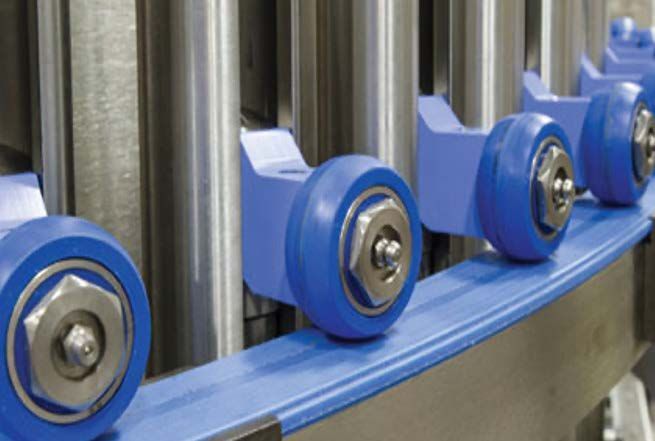
Detectable plastics are formulated so fragments can be found by metal detection and or X-ray systems, supporting food safety controls and contamination prevention programs. They are often supplied in high-visibility blue for easier visual detection.
Which detectable plastics are commonly used in food processing conveyor parts?
Common routes are:
1) Metal and X-ray detectable UHMW-PE for wear strips, guides, rails, and similar sliding parts
2) Ultra-detectable PBT polyester such as HYDEX 4101 UD Blue (TECADUR PBT UD blue) designed for the food processing environment and detectable by multiple systems
3) ACETRON Acetal VMX ( Visual, Metal, X Ray detectable) Food Grade POM-C and TECAFORM AH UD (ultra detectable) Acetal
4) TIVAR VMX UHMW PE Food Grade Blue
How do plastics reduce conveyor drag and energy use?
Lower friction materials reduce the force needed to move chains and products, which can lower power demand. Many conveyor component suppliers specifically position engineered sliding materials and low-friction plastics as performance and efficiency upgrades in conveyor technology.
What should I consider for washdown and chemical exposure?
For frequent washdowns and chemical cleaning, material selection should account for chemical resistance and how the plastic behaves in wet environments. Many food-processing conveyor component suppliers highlight UHMW-PE and other engineered plastics for wet, washdown conditions and sanitation-driven uptime.
Does temperature affect friction and wear on conveyor systems?
Yes. Temperature affects both the material and the system, including friction, wear, and dimensional change. If your conveyor sees elevated heat (ovens, hot-fill, heated wash), choose plastics rated for that temperature range and design for expansion.
Why does coefficient of thermal linear expansion (CLTE) matter for wear strips and guides?
Plastics expand and contract with temperature changes. If a wear strip or guide rail is installed without allowing for expansion, you can see binding, buckling, or tolerance issues. CLTE helps you plan fastener spacing, slotting, and expansion gaps so the system stays aligned across temperature swings.
Plastic Materials for Food Processing & Conveyance
Fluorosint 207
Laird Is A Leader In Food Grade High Performance Materials
Fluorosint® 207 modified PTFE is an FDA-approved extremely dimensionally stable material with excellent creep resistance and a white color. It is non-permeable in steam and complies with the FDA’s regulation 21 CFR 175.300 that lists products suitable for food contact. Its relative wear rate is 1/20 the rate of virgin PTFE below 300°F (150°C), making it an excellent choice for hard working applications such as seals, bearings, gaskets and valves in filling stations and dosing applications. It’s a perfect upgrade in performance over virgin PTFE and can extend your MTBR and lower your overall manufacturing costs.
Polyethylene
Polyethylene (PE) is the most commonly used thermoplastic for food processing and conveyance equipment, and is most diverse by application usage.
Polyethylene is an organic polymer made by the polymerization of monomer subunits (C2H4)n. Essentially, it's a mixture of similar polymers of ethylene, with various values of n. The values of (n) create a variety of formulations to suit many applications in food and conveyance equipment. PE properties uniquely align to check all performance criteria required for dynamic and static components. Commonly specified grades are Low Density (LDPE), High Density (HDPE), and Ultra High (UHMW-PE).
Three key chemical characteristics that define PE formulations are molecular weight, the type of chemical chain, and the length of chemical chain. For example LDPE is a branch chain with a molecular weight of 500K/Amu. HDPE is a linear chain with a molecular weight >2M/ Amu, and UHMW-PE is a long linear chain ranging from 3.5M to 7.5M/Amu.
Polyethylene grades deliver big performance on a small budget. They provide excellent chemical and impact resistance, low coefficient of friction, are lightweight, have extreme abrasion resistance, are weldable, and offer near-zero moisture absorption. These properties are why Polyethylene is universally used for fabricated parts and components, and specified for use within the Food and Conveyance Industry.
Röchling LubX® CV
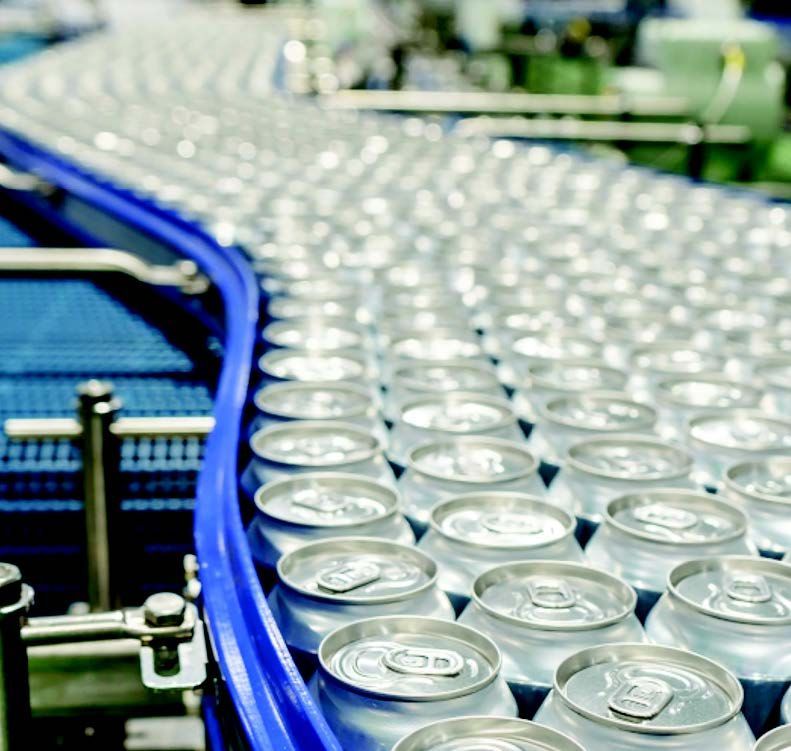
Incredible sliding in the curves!
When it comes to delivering superb productivity in conveyance and food processing applications, Röchling offers their LubX® product portfolio. Within that product line is LubX® CV. LubX® CV is specifically designed to give engineers a solution for high speeds and increased loads in conveyance applications, delivering higher productivity due to less time between repair and replacement vs standard oil filled food grade UHMW-PE. When used selectively with the other LubX® materials, engineers can design systems that balance cost and maximize longevity and efficiency. Whatever part you replace the most in your conveyor system, this may be an ideal candidate for an upgrade to LubX® CV. LubX® CV is both FDA and 10/2011/EU compliant and visually detectable by its blue color. It’s a Gold Medal Solution!
Benefits Of LubX® CV
- Reduction in energy use
- Increased life of part
- Increased process stability
- Lower noise generation
- Shorter run-in duration
- Longer mean time between replacement
- Dry lubricant filled thus not attracting dust
Ensinger HYDEX® 4101 UD Blue
Tri-Detectable Super Polymer for Food Processing
Polyesters are a family of resin polymers known for their toughness, chemical resistance, dimensional stability, low moisture absorption, and strong thermal properties. Essentially, polyesters are produced through a reaction between an organic acid, in this case terephthalic acid, and an alcohol. For PET, the alcohol is ethylene glycol, hence the “E” in PET. For PBT, the alcohol is butylene glycol, hence the “B” in PBT.
While the difference in the alcohol component is clear, both materials are aromatic esters, and their properties can vary depending on the polymerization process and other formulation factors. Polybutylene terephthalate (PBT) is a polyester valued for its strong performance relative to its cost.
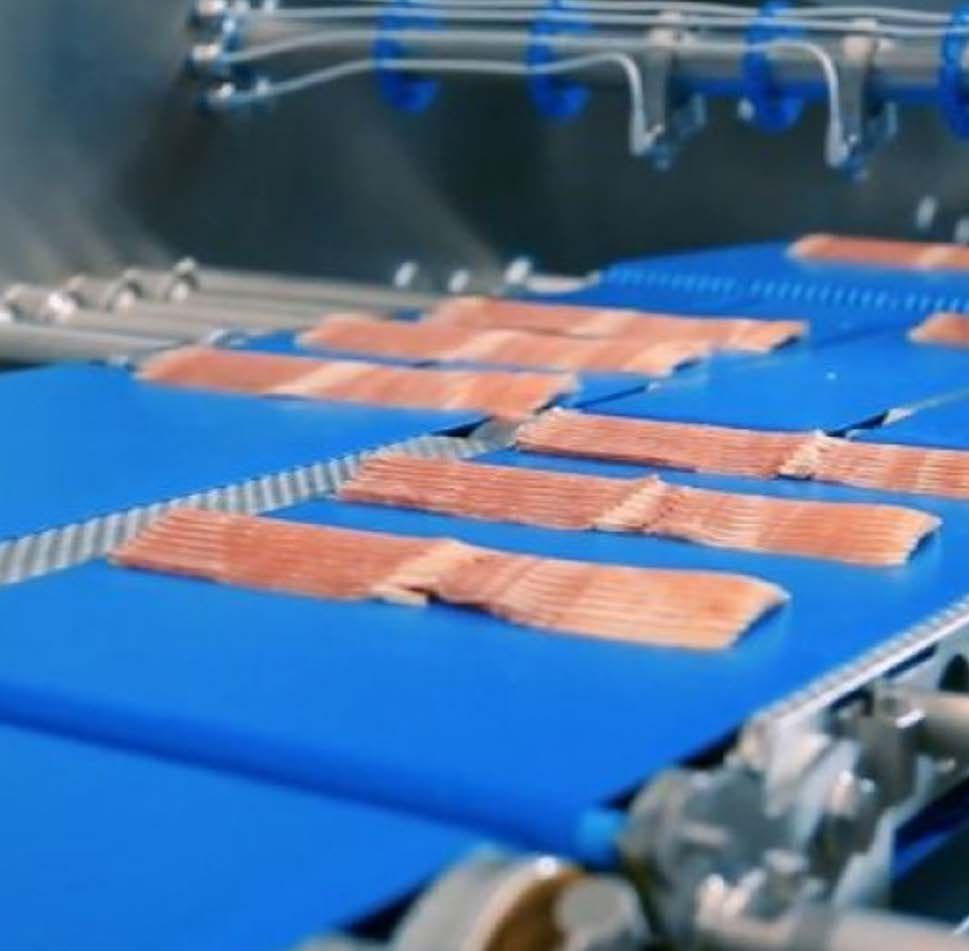
When it comes to Food Processing and Conveyance applications, Ensinger offers HYDEX® 4101 UD Blue. HYDEX® 4101 UD Blue is an FDA compliant blue PBT solution for demanding food processing applications. If it's EU compliance you need, we offer HYDEX® 4101 natural. But it does not stop there - HYDEX® 4101 UD Blue also delivers tri-detectable capabilities. Its blue color allows for visible detectability while it is also X-Ray & Metal detectable. So, you get all that along with the performance of a PBT polyester material:
- Dimensional Stability
- Chemical resistance to cleaning agents
- Thermal resistance, 221°F long term service temperature
- High strength, 550,000 psi Tensile Modulus
Discover More About Plastics in the Food Industry